
BST602 Advanced Construction Technology Group Project Assignment 2026
Assignment Type
Group Project
Subject
BST602 Advanced Construction Technology
Uploaded by Malaysia Assignment Help
Date
12/29/2025
BST602 Group Project Assignment
Land Reclamation and Soil Improvement Proposal for Kampung Tanjung, Batu Rakit, Kuala Nerus, Terengganu
Lecturer: Dr. Julaida Kaliwon, Dr. Norsalisma Ismail Centre of Studies for Building Surveying
Semester: October 2025 – February 2026
Total Marks: 100%
💡 Struggling with your BST602 Advanced Construction Technology group project?
Project Overview
This group project helps students understand how to reclaim coastal land and improve soft soils, so they become suitable for future development. Students will investigate site conditions, select appropriate reclamation and soil improvement methods, produce a simple construction plan, and present their findings.
Site Location
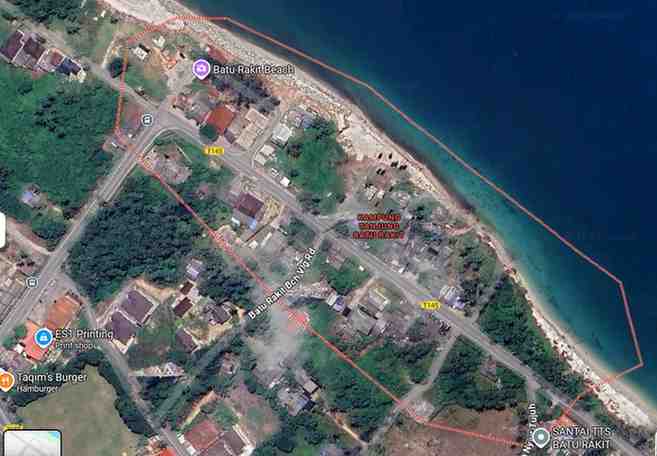
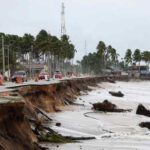
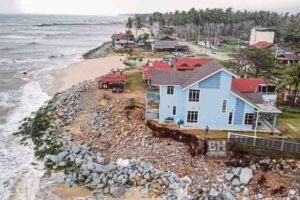
Kampung Tanjung, Batu Rakit, Kuala Nerus is a coastal village approximately 20 km north of Kuala Terengganu city. The site faces the South China Sea and is generally low-lying with soft marine clay and high groundwater. The location is suitable for studying land reclamation and ground improvement for simple developments such as housing clusters, a coastal park, or a community facility.
Project Purpose
The project aims to help students understand how to reclaim coastal land and improve soft or unstable soil to make it suitable for development. As Building Surveying students, you will:
- Assess and describes site and soil conditions,
- Identify issues related to land reclamation,
- Recommend suitable soil improvement methods,
- Plan and present a feasible development proposal for the site.
Part A: Introduction (15 marks)
In this section, students are required to provide a clear description of the selected site, Kampung Tanjung, Batu Rakit, Kuala Nerus, Terengganu. The description should explain where the site is located, including its geographical position and surrounding context. Students should elaborate on the site’s environmental characteristics, existing land use, and overall physical condition. It is important to identify any observable challenges that may affect development potential, such as coastal erosion, flooding, or the presence of low-bearing or soft soil.
Students must also present key data and information related to the site. This includes a discussion on soil type and characteristics (for example, whether the soil consists of soft clay, sand, or silt), groundwater levels, and drainage patterns. The current land elevation and potential flood risks should also be highlighted to demonstrate an understanding of the site’s vulnerability and engineering challenges. To strengthen the explanation, students are encouraged to include relevant photographs, maps, and simple sketches to illustrate the existing conditions of Kampung Tanjung and its surrounding area.
Summary:
1. Site Description
-
- Describe where Kampung Tanjung is located.
- Explain the site’s environment, existing land use, and physical condition.
- Identify challenges such as erosion, flooding, or low-bearing soil.
2. Key Data and Information
-
- Present information on:
o Soil type and characteristics (soft clay, sand, silt)
o Groundwater level and drainage
o Current land elevation and flood risk - Include photos, maps, and sketches to illustrate site conditions.
- Present information on:
Part B: Land Reclamation and Soil Improvement Proposal (40 marks)
1. Proposed Land Use
This section forms the core of the report. Students are required to describe how the selected area can be reclaimed and made safe for future development. The discussion should begin with a proposed land use plan for the reclaimed site, such as residential housing, a recreational park, a community facility, or a coastal walkway. Students must explain the rationale for selecting the proposed development, demonstrating its suitability for the site’s location and environmental conditions. The explanation should also highlight the potential benefits that the proposed project will bring to the local community, including improvements in accessibility, safety, sustainability, or social well-being.
2. Land Reclamation Methods
You must explain the method(s) you propose to use to reclaim and raise the land safely. Include a simple diagram showing how the reclamation will be carried out and contained.
Choose one or more from the table below and explain how it will be applied at your site with the aid of appropriate case study:
| Method | Description | Suitable For |
| Hydraulic Filling (Sand Fill) | Sand is pumped from the seabed to fill and raise low areas. | Large coastal areas and seafront projects. |
| Dry Earth Filling | Soil from nearby areas is placed and compacted layer by layer. | Small inland or low-lying sites. |
| Dredging and Filling | Excavated material (sand or silt) is used to fill coastal areas. | Shallow coastal areas. |
| Containment Bunds | Rock or sand bunds built around the site to hold the fill material. | Sites near water or soft ground. |
| Sea Wall / Revetment | Concrete or stone walls built to protect the reclaimed land from waves. | All coastal reclamation areas. |
3. Soil Improvement Methods
After reclamation, soft or unstable soil must be improved before building. Include a sketch showing the improvement method and explain why it is suitable for the site condition. Choose and explain suitable methods from the list below with the aid of appropriate case study:
| Method | Description | Purpose |
| Preloading with Vertical Drains | Add weight (surcharge) to press out water from soft clay; vertical drains speed up consolidation. | To reduce settlement and improve strength. |
| Dynamic Compaction | Drop heavy weights on the soil surface to densify the ground. | To strengthen sandy or loose fill. |
| Vibro-Replacement (Stone Columns) | Insert stone columns into soft soil using vibration tools. | To improve drainage and stability. |
| Deep Soil Mixing | Mix cement/lime into soft soil to create solid columns. | To stabilize weak clay or silt. |
| Geotextile Layers | Place geotextile fabric between soil layers. | To separate weak soil and fill, and distribute load evenly. |
4. Construction Planning
Students must outline the main stages of the reclamation and soil improvement process from site preparation to project completion. The plan should include the following sequence of activities: site clearing and surveying, construction of containment bunds, filling and compaction of materials, execution of soil improvement works, and continuous monitoring and maintenance after completion.
A simple Gantt chart or timeline must be included to illustrate the project phases and duration of each activity. The plan must also explain the role of building surveyors throughout the process, including responsibilities such as site inspection, quality control, monitoring of settlement, and maintaining accurate site records during and after construction.
Part C: Analysis and Solutions (15 marks)
In this section, students are required to conduct a SWOT analysis to evaluate the potential and limitations of the proposed land reclamation project. The analysis should identify the strengths, such as the creation of new stable land and the opportunity to expand development areas. It should also highlight weaknesses, including the high cost of reclamation and the extended time required for soil settlement. Opportunities such as promoting local economic growth, attracting tourism, and creating safer community spaces should be discussed. Students must also acknowledge potential threats, including sea-level rise, ongoing coastal erosion, and other environmental impacts that could affect the long-term sustainability of the project.
Students should then discuss the problems and challenges commonly associated with reclamation and soil improvement work. These may include settlement of reclaimed land, erosion caused by wave action or rainfall, waterlogging, poor drainage, and potential environmental disturbances. Each issue should be explained in relation to the site conditions at Kampung Tanjung, Batu Rakit, to demonstrate understanding of real-world implications.
The final part of this section requires students to propose solutions and an action plan. Students should suggest practical measures such as installing an appropriate drainage system to prevent waterlogging, constructing seawalls or revetments for coastal protection, and implementing regular settlement monitoring programs. The action plan should distinguish between short-term actions to be taken during the construction phase and long-term measures to be continued after project completion to ensure land stability and sustainability.
Part D: References (5 marks)
- Include a list of references for all materials, books, and websites used.
- Use APA or Harvard referencing style.
- A minimum of five (5) references is required, including textbooks and online sources.
Part E: Peer Assessment (10 marks)
- Each group member will evaluate their teammates’ contribution based on:
o Attendance in group meetings
o Effort and participation
o Communication and teamwork
o Quality of assigned task - Peer assessment marks will contribute 10% to each student’s individual project grade.
Deliverables
Each group will submit:
1. Group Report
-
- Maximum 3,000 words.
- Must be professionally formatted and include visuals: maps, diagrams, tables, photographs, cross-sections, fill/settlement curves, etc.
- Must include technical justification and appropriate references (standards, case studies, literature).
2. Presentation
-
- 15-20 minute oral presentation per group.
- Should summarise key findings, design proposal, method selection, and innovations.
- Use visual aids: slides, posters, diagrams, 3D model if possible (e.g., SketchUp, Revit).- will inform later
- Should clearly explain why specific soil improvement methods were selected and how the reclamation supports the overall design
BST602 Group Work
- Each group must have 4–6 members.
- Each member should take one section of the project (data, design, analysis, visuals, presentation).
- All members must contribute equally.
Assessment Breakdown (Total: 100 Marks)
| Component | Description | Marks |
| Part A: Introduction | Site description, data, visuals | 15 |
| Part B: Reclamation & Soil Improvement Proposal | Technical explanation, suitability, diagrams | 40 |
| Part C: Analysis & Solutions | SWOT, challenges, problem-solving | 15 |
| Part D: References | Use of reliable and cited sources | 5 |
| Part E: Peer Assessment | Team contribution and cooperation | 10 |
| Presentation Quality | Clarity, visuals, teamwork, timing | 15 |
| Total | 100 marks |
💡 Need expert help with UiTM standard for BST602 Assignment?
Get Help By Expert
The BST602 Advanced Construction Technology Group Project requires clear site analysis, practical land reclamation methods, and well-justified soil improvement solutions. Many students struggle with linking theory to real coastal conditions, construction planning, and SWOT-based evaluation. At Malaysia Assignment Help, we provide human-written, AI-safe construction technology assignment answers aligned with Building Surveying standards. Get expert guidance from Construction Technology Assignment Help professionals for structured reports, diagrams, and presentations. Complete your project confidently with trusted help from assignment helper.

Recommended Assignments for You
Related University Assignments
- HTH669 Case Study 2 Assignment 2026: Tune Hotels Automation and Job Displacement
- MGT659 Concepts and Applications of Strategic Management Group Assignment 2026
- MAT133 Precalculus Assessment 3, 2026 | UiTM Malaysia
- PHT485 Exercise Physiology Written Assignment 1, 2026 | UiTM
- TAX 467 Taxation 1 Assessment Group Project 2026 | UiTM
- FIN533 Personal Financial Planning Individual Assignment 2026 | UiTM
- MAF661 / MAF640 Strategic Management Assignment Brief 2026
- ISP 531 Business Process Management Assignment Brief 2026 | UiTM
- RES621 Investment Analysis Assignment Brief 2026 | UITM Malaysia
- SRT666 Statistic In Behavioral Sciences and Sport Assignment 2026

Convincing Features