
MKW3000 Strategic Branding Assignment 2 Brief 2026 | Monash University
Assignment Type
Individual Assignment
Subject
MKW3000 Strategic Branding
Uploaded by Malaysia Assignment Help
Date
04/28/2026
MKW3000 Assignment 2 Brief

| Unit Name | Strategic Branding |
| Unit Code | MKW3000 |
| Assignment Name | AR Brand Prototype: Designing Experiential Brand Touchpoints |
| Assignment Number/Reference | 2 |
Learning Outcomes
This assignment assesses the following learning outcome:
| Learning Outcome Number | Learning Outcome Description |
| 2 | Apply contemporary technologies to provide solutions for effective brand campaigns |
Weighting
This assignment is worth 30% of your overall grade for this unit. Please see the assignment rubric for the weightings of each assessment criterion.
Requirements
This assignment has the following requirements:
| Assignment Type | Individual |
| Response Format | Industry-Style Branding Artefact (30%) |
| Response Specifications | Please refer to Prototype Guidelines section |
| Due Date | Week 8: Thu, 30th April 2026, 11:55 pm |
| Submission Process | Via Moodle |
| Notes: | See below |
Client Context
Pokka is our industry client for MKW3000. They have provided a real-world branding challenge and are interested in seeing how students analyse, activate, and strategies for their brand. This is an authentic assessment opportunity: your work could provide valuable insights for Pokka and demonstrate your ability to apply branding theory to a live business scenario. Students are encouraged to approach the task with creativity, analytical rigor, and professionalism. Further details on client presentations and potential rewards from Pokka will be posted on Moodle.
Assignment Instructions
Building on the brand selected in Assessment 1, this task requires you to develop an AR-based Building on your analysis in Assessment 1, this task requires you to develop an AR-based Brand Experience Prototype for Pokka that demonstrates how the brand is experienced through immersive, interactive touchpoints. The objective is to move from brand analysis to experiential design, translating Pokka’s current brand identity and positioning into a tangible, engaging interaction. You will design a prototype that shows how Pokka’s personality, values, and tone are expressed across one or more augmented or digitally layered touchpoints. This assessment focuses on activating the current brand, not designing new products or entering new markets. The AR integration must enhance the brand experience, reflecting its identity, emotional resonance, and symbolic meaning, rather than functioning as a decorative or purely technological addition.
Nature of Prototype:
Create a Brand Experience Prototype that reflects how Pokka’s existing brand operates across key touchpoints, such as product packaging, retail or in-store concepts, digital interfaces, campaign activations, events, or social media. The AR component may take the form of:
- Interactive packaging
- AR-enabled posters or filters
- Retail or pop-up activations
- Campaign storytelling
- App-based experiences
The prototype should simulate a realistic consumer interaction, showing how the brand experience unfolds when activated. This is not a mood board, collage, or static brand guideline document; it must be a storytelling and design-driven simulation of the actual brand experience.
AR Demonstration Video:
You are required to submit a demonstration video or AR simulation (1 min max) that clearly showcases how your prototype functions. The video should illustrate the user journey, including how the AR feature is activated, what the audience sees and interacts with, and how the experience reinforces the Pokka’s identity and positioning. The demonstration should communicate the intended emotional and sensory impact of the experience. It should simulate realistic engagement and clearly show how AR enhances the Pokka’s experiential dimension rather than simply adding visual novelty. Conceptual clarity, coherence, and brand alignment are more important than technical complexity. This should be explanation or presentation video.
Written Rationale (300 to 500 words):
In addition to the prototype demonstration, you must submit a 300–500 word written rationale as a separate PDF document. The rationale should explain the strategic intent behind your AR-based brand experience and justify the selection of specific touchpoints. You should clearly articulate how the prototype communicates the Pokka’s identity, values, and positioning, and how the AR component enhances symbolic meaning and experiential depth. The rationale should also discuss the intended emotional and sensory impact on the target audience and demonstrate continuity with the brand insights developed in Assessment 1. Your explanation must link creative decisions to branding concepts and experiential strategy, showing clear theoretical and strategic grounding.
Deliverables:
- Visual artifact/prototype (e.g., Figma mockup, PowerPoint deck, stylised PDF, Canva design, Miro board, or webpage demo) – Moodle submission
- Written rationale (300–500 words) explaining: The strategic intent behind your brand experience, The key touchpoints selected and why, How these touchpoints communicate the brand’s values and identity, The intended emotional and sensory impact on the target audience. Moodle submission
- Demonstration Video. Moodle submission
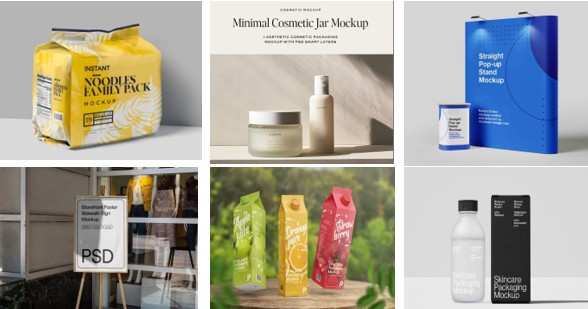
Examples of Prototype Touchpoints:
- Retail & fashion (e.g. pop-up concepts)
- Tech (e.g. app mockups, onboarding journeys)
- F&B and hospitality (e.g. in-store branding)
- Personal care (e.g. packaging + tone of messaging)
- B2B services (e.g. client onbording kit)
Tools/technologies You Can Use:
Canva, Figma, Adobe XD, Miro, PowerPoint/Keynote, Adobe Illustrator, web builders, video tools (CapCut, Canva, Adobe Express), AI image tools, Augmented Reality, Social media filters etc.
Prototype Guidelines
- The design should be in the form of a poster designed on A1 size (landscape/portrait layout is acceptable).
- The estimate size of A1 poster is 594 x 841 mm or 59.4 x 84.1 cm, which is 23.4 x 33.1 inches.
- Important information should be readable from about 3-5 feet away.
- Important that you include your full name and institutional affiliation and logo on top of your poster.
- You should also include acknowledgments or copyright disclamers (if applicable) at the bottom.
- The word count is flexible (Tip: Please use your own discretion).
- Ensure the text on the poster is clear and to the point.
- Please make use of bullets, numbering, and headlines to make it easy to read.
- Please make effective use of graphics, colour and fonts.
- Keep a consistent and clean layout throughout your poster.
- Feel free to use any software that you’re familiar with to design your poster (e.g.
- PowerPoint, Canva, Prezi, Adobe Illustrator, Photoshop, InDesign and etc.).
- Remember to be creative and innovative as much as possible!
Submitting Your Poster
- Please submit your A1 poster in a pdf file with a separate PDF file of rationale.
Augmented Reality (AR) Guidelines
- This assessment focuses on introducing AR concepts; complex AR development is not expected.
- Watch: Scanning QR Code to experience Augmented Reality (AR).
- Read: Create Interactive Posters with Augmented Reality.
- Feel free to make use of any free AR development applications (app) like EyeJack Creator (Desktop App) / Unite AR (Mobile App) or any other AR app of your choice. The app will assist in generation of QR code which can be inserted onto your digital poster.
- Remember to include the QR code on your digital poster which will facilitate the AR experience to your audiences. Your AR application should be fully functional.
- Your digital poster design should be simple and easy to understand. The AR elements should complement the design and not overpower it.
- The AR experience should align with the goals and message of your digital poster. It should enhance the audience’s understanding and engagement with the poster.
- Testing the AR experience is crucial to ensure that it works as intended. Make sure to test it on different devices and in different environments to identify any issues or bugs.
AR Platform Subscription
Access to Blippar AR Platform – Learning & Teaching Grant 2025: As part of the Learning & Teaching Grant 2025 by Monash Education Academy, students enrolled in this unit will receive a free four-month subscription to Blippar, a leading AR development platform.
Information on the Blippar platform here: https://www.blippar.com/ Refer to free training videos and tutorials here: https://www.blippar.com/learn/ar-learn/gettingstarted
The CE will announce the subscription activation process and distribution details by Week 2 of the semester. However, students have the choice to use any other AR platform as recommended under ‘Augmented Reality (AR) Guidelines’ above.
Specification of AI Use
Please refer to Moodle for the AI statement corresponding to this assessment and a detailed description.
Solve MKW3000 Assignment 2 With Monash University Malaysia Standard.
Get Help By Expert
If you are working on the MKW3000 Strategic Branding Assignment 2 and finding it difficult to understand the AR prototype, there’s no need to stress. Many students face the same issue — they have ideas but struggle to present them in the right way. You can also choose Malaysia Assignment Help, just like many other students, where experts provide university assignment help based on your course requirements. For trust, you can even check Monash University assignment samples to see the quality of work provided. Order today our assignment helper and get a custom, human-written and plagiarism-free solution prepared specifically for your assignment.

Recommended Assignments for You
Related University Assignments
- ACW1020 Accounting in Business Assignment 2, 2026 | Monash University
- BFW2140 Corporate finance 1 Research-Based Assessment 2026 | MUM
- MKW3000 Strategic Branding Assignment 2 Brief 2026 | Monash University
- MKW1120 Marketing Fundamentals Assignment 1 Brief 2026 | MUM
- ETW3420 Principles of Forecasting and Applications Individual Assignment 3, Monash University Malaysia
- Principle of Macroeconomics Group Assignment September 2025
- Alternative Dispute Resolution Assignment: Addressing Consumer Disputes, Contract Clauses, and Employee Rights
- Macroeconomic Growth Assignment: OLS Time-Series Analysis Using 2015–2025 Economic Data
- 3D Point Cloud Segmentation Assignment: Oil Palm Tree Classification Using ML Techniques
- Heat Sink Design Assignment Project: Thermal Optimization for T/R Module in Phased Array Antenna

Convincing Features