
GFIN5113 Financial Management Assignment Question Paper 2026 | UNIRAZAK
Assignment Type
Individual Assignment
Subject
GFIN5113 Financial Management
Uploaded by Malaysia Assignment Help
Date
04/27/2026
GFIN5113 Assignment Question Paper
Part A (Case Study)
Background of Company
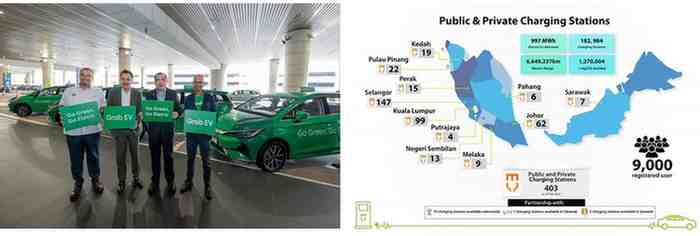
Grab Holdings has evolved from a ride-hailing platform into a leading super app in Southeast Asia, offering services including transportation, food delivery, digital payments, and financial services. In recent years, Grab has intensified its focus on sustainability and cost optimisation, particularly in response to rising fuel prices, environmental concerns, and increasing regulatory pressure across ASEAN markets.
In Malaysia, the government has introduced various initiatives to promote the adoption of electric vehicles (EVs), including tax incentives, subsidies, and the development of charging infrastructure. These policies align with the country’s broader goal of reducing carbon emissions and transitioning towards greener urban mobility solutions.
Against this backdrop, Grab Malaysia is exploring the feasibility of transitioning a portion of its driver fleet from conventional petrol vehicles to EVs. The proposed initiative involves the deployment of 1,000 electric vehicles to selected urban areas, particularly in Klang Valley, where ride demand is high and charging infrastructure is gradually expanding.
Case Information
Grab Malaysia plans to deploy a total of 1,000 electric vehicles in the Klang Valley area. Each EV costs RM120,000, resulting in a total vehicle cost of RM120,000,000. In addition, the company needs to invest RM20,000,000 in charging infrastructure to support the operations of the EV fleet.
The Malaysian government provides a subsidy of RM10,000 per vehicle. For 1,000 vehicles, this amounts to a total subsidy of RM10,000,000, which reduces the overall investment cost. Furthermore, the project requires an additional RM5,000,000 in working capital at the start of the project. This working capital is expected to be fully recovered at the end of the project. After accounting for all components, the total initial investment at Year 0 amounts to RM135,000,000.
Operating Assumptions
Each EV is expected to complete an average of 12 rides per day, with an average revenue of RM18 per ride. The vehicles are assumed to operate for 300 days per year. Based on these assumptions, each EV generates annual revenue of RM64,800, resulting in total annual revenue of RM64,800,000 for the entire fleet.
Operating costs, excluding depreciation, are estimated at 40% of total revenue. In addition, each EV incurs an annual maintenance cost of RM3,000, leading to a total maintenance cost of RM3,000,000 per year for all 1,000 vehicles.
The company is subject to a corporate tax rate of 24%, and the project should be evaluated using a discount rate (WACC) of 12%.
Depreciation
The total depreciable asset value for the project is RM110,000,000, which represents the net vehicle investment after deducting the government subsidy. The assets will be depreciated using the straight-line method over a useful life of five years, with no residual value for depreciation purposes. This results in an annual depreciation expense of RM22,000,000.
Terminal Value
At the end of Year 5, each EV is expected to have a resale value of RM40,000. For 1,000 vehicles, this results in a total resale value of RM40,000,000. Since the book value of the assets will be zero at the end of Year 5, the entire resale amount is considered a taxable gain. After applying the corporate tax rate of 24%, the after-tax salvage value amounts to RM30,400,000.
In addition, the RM5,000,000 working capital invested at the beginning of the project will be fully recovered at the end of Year 5. Therefore, the total terminal cash flow is RM35,400,000.
Additional Notes
All revenues and operating costs are assumed to remain constant throughout the five-year project period. There are no additional capital expenditures after Year 0, and inflation effects can be ignored. All cash flows are assumed to occur at the end of each year. Financing costs should not be considered separately, as the discount rate provided already reflects the company’s weighted average cost of capital.
Instruction: Answer all questions
Question 1
a) Complete Investment Outlay for Year 0.
(5 marks)
b) Calculate Terminal Cash Flow at Year 5.
(5 marks)
c) Calculate the Net Present Value and Internal Rate of Return (IRR) of the project.
(10 marks)
d) Explain what happens if the assets are sold below the expected resale value.
(5 marks)
e) Calculate Annual Operating Cash Flows (Year 1 – 5).
(15 marks)
(TOTAL: 40 MARKS)
END OF PART A
Part B (Essay Question)
Question 1
a) Analyse the concept of the Time Value of Money (TVM) in influencing financial decisionmaking in long-term investment projects.
(5 marks)
b) Calculate the present value of the following cash flow stream, assuming a discount rate of 10% per annum:
Year 1: RM6,000
Year 2: RM8,000
Year 3: RM10,000
Year 4: RM12,000
(5 marks)
c) Analyse how Islamic finance contracts such as Murabahah and Ijarah incorporate the concept of time value without violating Shariah principles.
(5 marks)
d) A firm enters a Murabahah contract for an asset costing RM120,000 with a 25% profit margin, payable over 4 years in equal instalments. Analyse the structure of the payment and explain how the total payment reflects time-based value recognition.
(5 marks)
(TOTAL: 20 MARKS)
Question 2
a) Evaluate the impact of financial leverage on shareholder returns.
(5 marks)
b) Company X is evaluating two financing options for an RM2 million expansion:
Option A (Equity financing): Issue 400,000 new ordinary shares at RM5 each Option B (Debt financing): Borrow RM2 million at 10% annual interest.
EBIT = RM 600,000
Tax Rate = 25%
Evaluate the financing options based on Earnings Per Share (EPS) and the company currently has 400,000 ordinary shares outstanding.
(15 marks)
(TOTAL: 20 MARKS)
Question 3
a) Evaluate the use of ordinary shares and bonds as long-term financing instruments.
(5 marks)
b) A company has just paid a dividend of RM2.50 per share. Dividends are expected to grow at 6% annually, and the required rate of return is 11%. Evaluate the value of the share using the Dividend Discount Model.
(5 marks)
c) An investor is analysing a bond with the following features:
-
- Face value: RM1,000
- Coupon rate: 8%
- Maturity: 5 years
- Market rate (YTM): 10%
- The bond is currently selling at RM920.
Evaluate the investment decision.
(10 marks)
(TOTAL: 20 MARKS)
END OF PART B
Order Ai-Free Answer For GFIN5113 Financial Management Assignment
Get Help By Expert
Struggling with your GFIN5113 Financial Management assignment, especially with calculations like NPV, IRR, operating cash flows, and financial decision analysis? This is a common issue, as many students find it difficult to combine financial formulas with case-based reasoning and accurate interpretation. In such situations, you can rely on Malaysia Assignment Help, where experts provide financial management assignment help aligned with your university requirements. You can also review our unirazak assignment samples to understand how similar case studies are solved. If you want accurate and stress-free solutions, choose our pay someone to do my assignment service and get a fully customised, human-written assignment prepared just for you.

Recommended Assignments for You
Related University Assignments
- GMDS 5113 Quantitative Techniques and Decision Making Mid-term Assignment 2026
- GMGT5173 Organisational Behaviour Individual Assignment 2026
- GMGT5123 Organisational Development and Change Individual Assignment 2026
- GMGT 5313 International Business Final Assessment 2026 | UniRazak
- GHRM 5113 Strategic Human Resource Management Paper Critique Assignment 2026
- GHRM5113 Strategic Human Resource Management Mid Term Assignment 2026
- GMGT 5173 Organisational Behaviour Final Assessment Brief 2026 | UniRazak
- GACT 5113 Managerial Accounting Assignment Brief 2026 | UNIRAZAK
- GFIN5113 Financial Management Assignment Question Paper 2026 | UNIRAZAK
- GECO5113 Business Economics Individual Assignment 2026 | UNIRAZAK

Convincing Features